
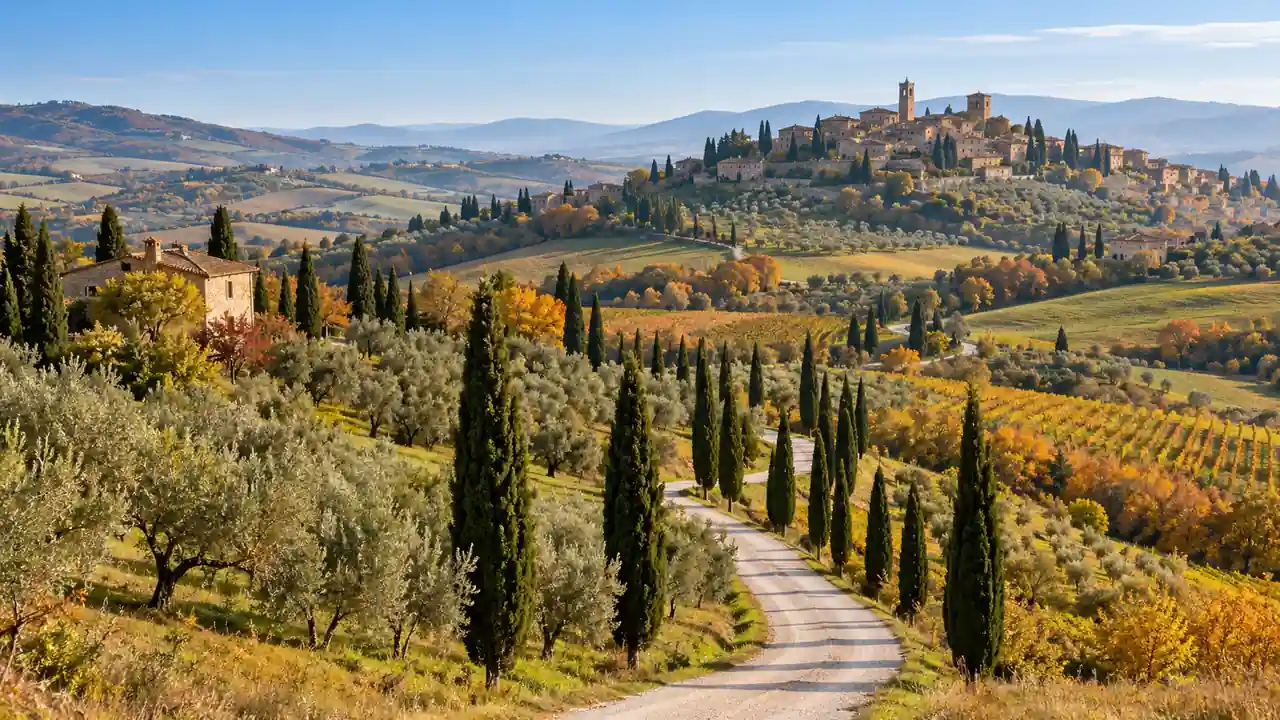
Choose the shape of the trip before the hotel
Tuscany works best when you distinguish city visits from countryside days. Florence offers art and neighbourhood walks; Siena brings a different medieval setting; San Gimignano is a smaller hill town; Chianti is a landscape of villages and estates between Florence and Siena. Build around those four experiences, then decide what matters most to your group. Five days means five usable days, excluding an arrival too late to explore or an early departure. Put your flight, station and luggage requirements into the route first. A country property can be attractive, but its location may require a vehicle for every dinner and excursion.
Florence, Siena or the countryside as a base
Florence is a practical first base when you want museums and organised countryside departures alongside urban transport. Compare the hotel’s actual walk to the station and tour meeting point, including luggage and steps. Siena suits travellers who want evenings in a smaller historic city and more time there than a brief day trip permits. A countryside stay is useful when the property itself is part of the holiday and your transport is resolved. For five days, one base reduces hotel changes. With seven, splitting between Florence and Siena can work if the change supports your onward journey instead of adding a transfer merely for variety.
Five days: two Florence days, then three distinct outings
Use day one for Florence’s historic centre and an unhurried orientation walk; reserve day two for your chosen major museum or monument plus another neighbourhood. Do not assume separate attractions share admission rules. Day three belongs to Siena, including Piazza del Campo and time for lunch. Day four can focus on San Gimignano with a confirmed outward and return connection, or a guided village excursion. Keep day five for Chianti, choosing a wine-focused trip or a countryside visit according to your interests. This sequence is a planning proposal, not a promise that every operator departs each day; rearrange it around confirmed reservations and transport.
Seven days: add depth or one coherent extension
With two additional days, first decide whether you want fewer transfers or a broader region. A slower version adds another Siena day and a flexible Florence day for weather, rest or an attraction left out earlier. Alternatively, allocate one day to Pisa or Lucca and use the other as breathing room. Val d’Orcia needs its own transport plan and works better as a deliberate southern extension than as an afterthought following Chianti. If you change hotels, put the change near a day that already moves you in that direction. Never count a luggage transfer day as completely free sightseeing time.
Trains, buses and the last stretch to a village
The railway is useful for urban routes such as Florence, Pisa and Lucca, but a station name does not tell you how close you are to the historic centre. For Siena compare the complete train or bus journey from your accommodation. Autolinee Toscane publishes Florence–Siena services and routes linking Poggibonsi with San Gimignano; check the exact service, stop, connection and return on your date. Public transport to a village does not automatically reach a winery outside it. Save the last practical return and an earlier alternative. If the connections consume most of your visiting time, reduce the route or compare an excursion with transport.
What a guided excursion genuinely solves
A tour can connect rural stops and remove the need to drive, but compare the detailed itinerary rather than the number of destinations in its title. A Siena, San Gimignano and Chianti combination is a sample of several places; it cannot offer the same depth as separate days. Check guided time versus free time, language, meeting point, vehicle size and whether meals or tastings are included. Avoid booking both a combined tour and separate visits that repeat its main stops unless you actively want to return. For a first trip, choose one excursion that solves a real transport problem and leave city exploration enough independent time.
Optional Pisa, Lucca and Val d’Orcia without overloading
Pisa makes sense when its monuments are a personal priority or its location fits arrival and departure. Lucca suits a separate urban day with time to walk and pause. Combining the two demands checking connections and choosing what you will actually visit, rather than assuming both fit around a countryside outing. Val d’Orcia belongs to a different day or stay, particularly when you want several rural stops. None is compulsory for a successful first visit. If you have only five days, replace an existing day with your favourite option instead of attaching all three. The resulting trip should reflect your interests, not a checklist of famous names.
Budget, accessibility and the final booking order
Book the framework first: accommodation with workable transport, any priority timed admission, then the countryside experience that fits your remaining day. Compare total costs for your party, including transfers to meeting points, food and any admissions excluded from a tour. Ask specifically about walking distance, slopes, stairs, vehicle access and winery facilities if mobility matters; a general accessible label may not cover each stop. Allow a buffer before an intercity train or flight after an excursion. Keep one reservation-light block for weather or fatigue. Before paying, review cancellation conditions and confirm that the itinerary still gives you time to eat, rest and enjoy each base.
Florence in two or three days: a first visit that works →Florence at Christmas 2026: market dates and a winter plan →Uffizi or Accademia: choose your Florence museum →Siena for a first visit: the Campo, Duomo and a sensible arrival →San Gimignano in a day: transfers, towers and enough time →Chianti wine tours from Florence: how to choose your day →
Frequently asked questions
Is five days enough for a first Tuscany visit?
Five full days can cover Florence plus focused visits to Siena, San Gimignano and Chianti. Treat arrival and departure time separately and remove a stop if connections make the days too long.
Do I need a car in Tuscany?
City travel can use trains and buses, while rural estates require more planning. A countryside excursion with transport may let you keep a city base without hiring a car.
Should I stay in Florence or Siena?
Choose Florence for more city time and convenient excursion departures; choose Siena for longer evenings there. Seven days can support both bases if moving hotels helps the overall route.
Can I add Pisa, Lucca and Val d’Orcia?
Choose an extension that fits your time and transport. These are optional routes, not extra stops to add to the same Siena, San Gimignano and Chianti day.