
Decide what your day is for
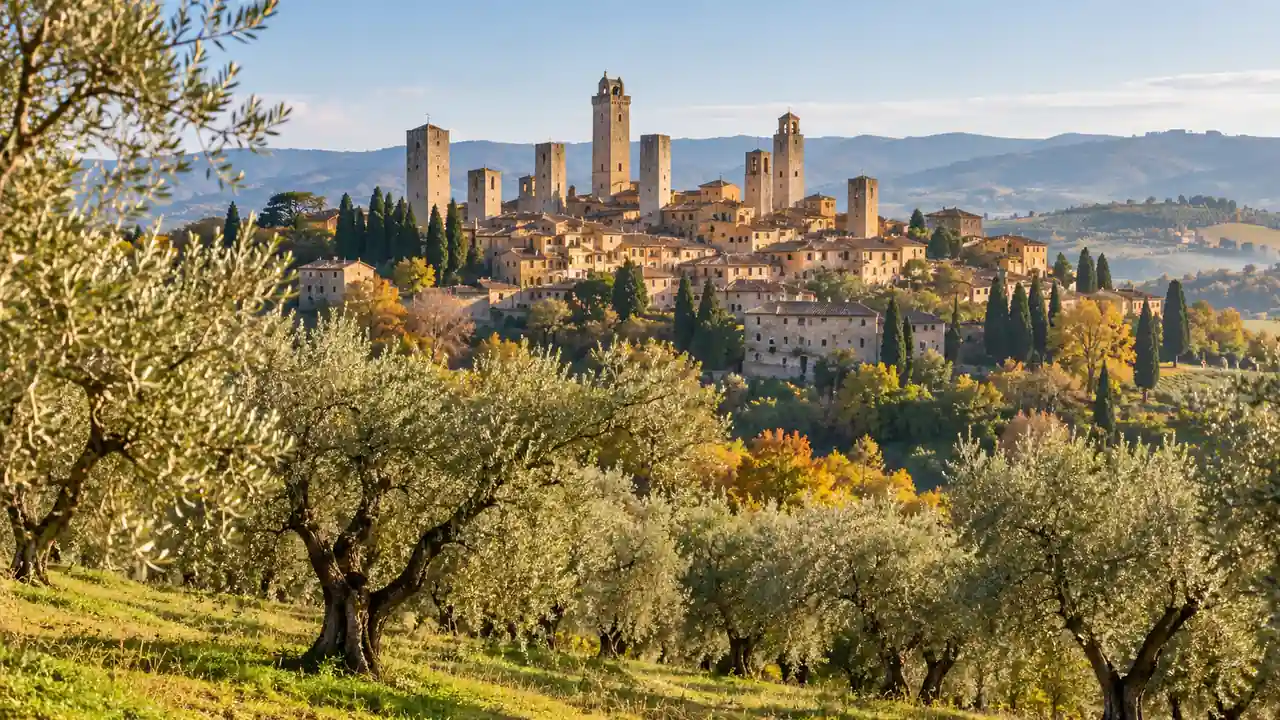
San Gimignano rewards a visit with a clear priority: the skyline, medieval streets, art or a countryside tasting. Choose one as the anchor and let the others fill the remaining time. For an independent day, a walking circuit with one substantial paid visit is a more comfortable starting point than collecting several tower entries. A short stop on a Tuscany coach tour offers a first impression, while several hours allow lunch and a quieter side street. Compare the hours you actually spend inside the town, excluding transfers, before deciding that two itineraries provide the same experience. The best schedule protects the thing you most want to see.
The Poggibonsi railway name needs decoding
The station called Poggibonsi–San Gimignano is in Poggibonsi, not beside San Gimignano's towers. An independent rail journey normally needs an onward bus or another arranged transfer. Look up the train and bus as two connected stages and leave room to find the correct stop. A rail ticket alone does not imply that the onward bus is included. On the return, check whether the bus connection reaches Poggibonsi with a comfortable margin for the train. Do this before booking a timed town visit; a cheap or convenient train departure is only useful if the complete chain works.
Compare a public bus with an arranged excursion
Public transport works well when its connections fit the date and the time you want in town. Verify the route, stop and day type rather than assuming that a service shown for a weekday runs the same way on Sunday. A guided excursion can simplify travel from Florence or Siena, but a route including other towns or a winery divides the day among several priorities. Read the itinerary for free time and where the guide actually leads a visit. A walking tour starting in San Gimignano does not automatically include the journey there. Compare those details before deciding whether the price buys interpretation, transport or both.
Build a simple walk around the squares
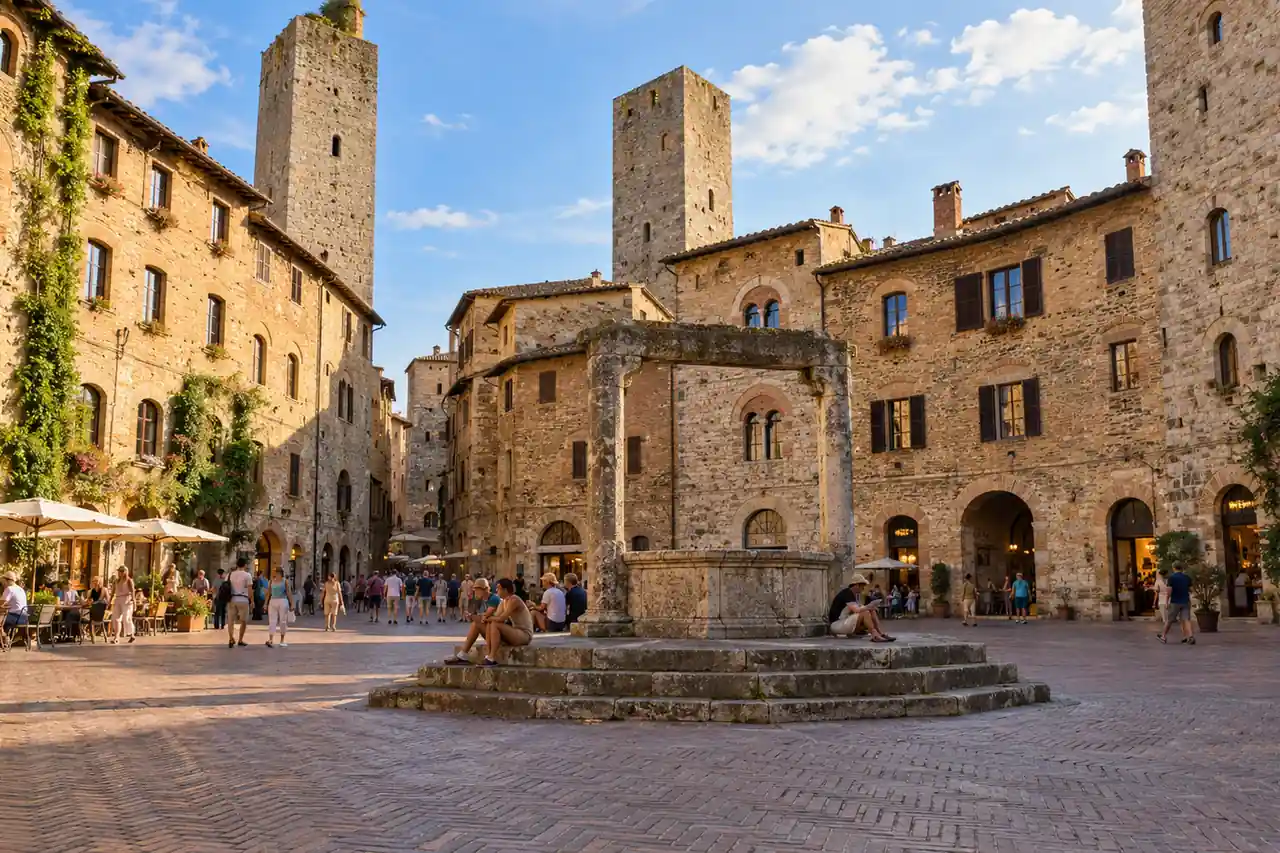
If you enter by Porta San Giovanni, follow the central approach towards Piazza della Cisterna and Piazza del Duomo, pausing to understand the relationship between towers, civic buildings and church. Do the principal walk before scattering your attention among shops. Mark the meeting point or departure stop while you still have plenty of time, then turn into a side street when the central axis is crowded. The historic centre is compact, but shopping, photographs and uphill passages slow the pace. Keep a single loop with one optional extension rather than repeatedly crossing town to chase a list of attractive names on your phone.
Torre Grossa is a specific visit
A wish to climb a tower needs a named ticket, not simply a booking whose photograph shows the skyline. Torre Grossa belongs with the Palazzo Comunale and Pinacoteca visit; read the exact product description and access conditions. Other towers and private attractions are separate propositions, and a walking guide may describe them from outside without admitting you. Choose the ascent only if the group is comfortable with stairs and the time required. If someone prefers to stay below, agree on a meeting place and realistic interval. A ground-level walk still gives a strong sense of the architecture, so the climb should serve your interests rather than dictate the entire day.
Passes, church visits and available time
The current San Gimignano museums programme offers an integrated Pass covering the Collegiata complex, Palazzo Comunale with Pinacoteca and Torre Grossa, Santa Chiara and San Lorenzo in Ponte. That does not make every town attraction part of the same ticket. Compare the listed sites with the ones you genuinely intend to enter; a broader pass is useful only if you have time to use it. Choose the frescoed church or civic museum as a sustained visit rather than dashing through both to justify a purchase. Keep current prices, reductions and opening times in your booking check, since older brochures can describe different products and validity periods.
Lunch, wine and the quieter part of town
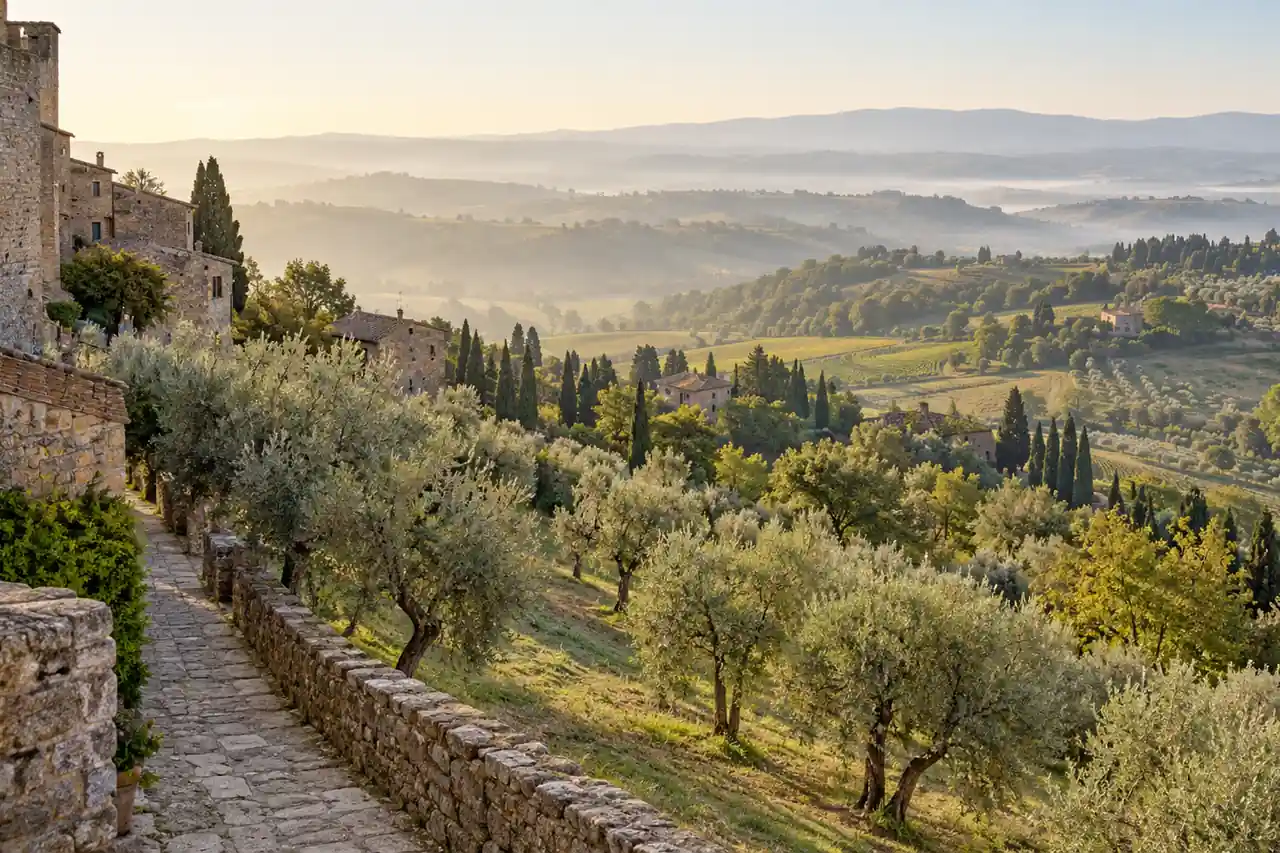
Leave a proper gap for lunch, particularly if you want a seated meal between an interior visit and the bus. For a tasting, distinguish an experience inside the town from a winery outside it: the latter adds a transfer and often a fixed start. Confirm the actual meeting point, transport inclusions, food and language. A tasting should not force the traveller driving home to drink. If wine is secondary, use the time for a calmer walk towards the Rocca area or another nearby viewpoint, checking the route against your group's stamina. Avoid pushing a countryside walk into the final minutes before a connection; downhill departure paths can still take longer than expected.
Protect the return before adding another town
Save the return stop, route and a second viable departure if the day's timetable provides one. Be back early enough to identify the correct direction and deal with a queue. If a delay would jeopardise a long-distance train, shorten the optional walk rather than relying on a perfect connection. Combining Siena and San Gimignano independently creates several transport stages and reduces time for interiors; an organised excursion can make the transfer easier but cannot create extra hours. Book the combined format when variety is the purpose. Keep San Gimignano as the only town when the tower, paintings, lunch and unhurried streets are the experience you want to remember.
Florence in two or three days: a first visit that works →Florence at Christmas 2026: market dates and a winter plan →Uffizi or Accademia: choose your Florence museum →Siena for a first visit: the Campo, Duomo and a sensible arrival →Chianti wine tours from Florence: how to choose your day →First trip to Tuscany: bases and a realistic five or seven day route →
Frequently asked questions
Does San Gimignano have a train station?
There is no railway station in the historic centre. The Poggibonsi–San Gimignano station is in Poggibonsi, so a rail journey needs an onward connection. Check both stages and their return before making timed plans.
Is a tower climb included in a walking tour?
Only when the product explicitly includes it. Many walking tours provide interpretation outside monuments. Look for the tower's name, admission inclusion and any physical requirements instead of relying on the main photograph.
Is the museums Pass worth buying for a short stop?
Compare the places you will enter with the current inclusions. A broad pass can suit a longer art-focused visit, but buying access to several sites does not leave more time to explore them before your departure.
Can I add a winery without a car?
Yes, if an experience provides suitable transport or a workable transfer is arranged. Check the real meeting point carefully: a destination label or old itinerary description is not proof that pickup from your base is included.