
Build four days around areas, not a checklist
Give each day one geographical anchor: the Eiffel Tower and western riverbanks, the Louvre and central Paris, the islands and Latin Quarter, then Montmartre or a personal interest. This is an editorial route, not a promise that every attraction fits. Place your hardest-to-find reservation first and swap days around it. Leave a free block after a museum rather than treating every gap as another booking. Paris rewards the café stop, the unexpected shop and the slower walk as much as the famous photograph.
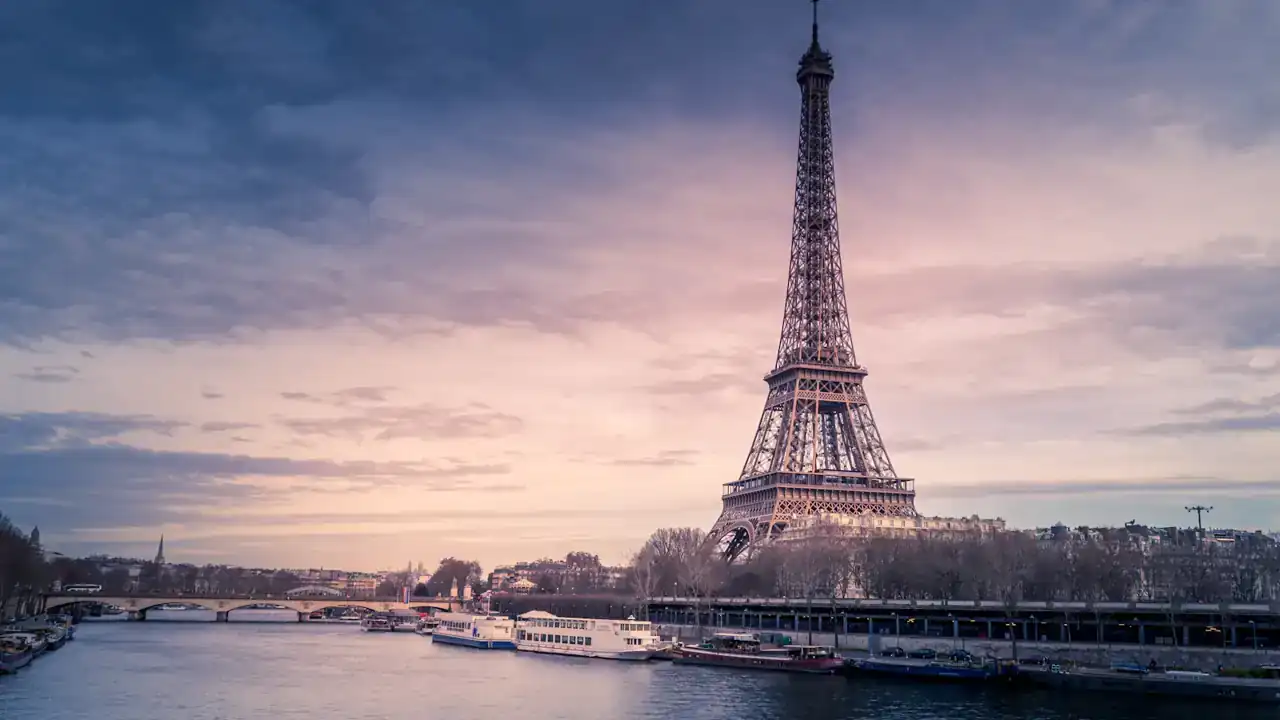
Day one: Eiffel Tower, Trocadéro and the river
Start around Trocadéro for a view of the tower, then approach the monument and its gardens at a comfortable pace. If going up matters to you, select second-floor or summit access explicitly before booking. A guided experience can add context, but its title alone does not establish which level is included. Afterwards, choose a riverbank walk or a cruise with a nearby departure point. Avoid reserving the cruise immediately after the tower: security, lifts and your own time enjoying the view can extend the visit.
Day two: Louvre, Tuileries and central streets
Reserve a Louvre visit with a manageable goal: a highlights route, a particular collection or a guided introduction. Seeing the entire museum is not a useful objective for one morning. Choose lunch afterwards, then decide whether to continue through the Tuileries or explore the streets around Palais-Royal. A tour is worthwhile when you want someone to connect the works and organise the route; independent entry suits visitors who prefer their own pace. Confirm whether museum admission is included, the guide's language and the precise meeting location.
Day three: the islands and the Latin Quarter
Use the islands and the Left Bank as a walking day, with stops rather than a succession of deadlines. Enjoy the river views around Île de la Cité and Île Saint-Louis, then continue towards the Latin Quarter according to your energy. Any interior visit needs its own access check: a neighbourhood walk does not automatically include monuments along the route. Leave lunch flexible and consider a Seine cruise later if you did not take one on day one. Match the departure pier to your final walking area.
Day four: Montmartre or the Paris that interests you
Choose Montmartre if you want neighbourhood streets, viewpoints and a different atmosphere from the river. Its slopes and steps make a slower route sensible, particularly with children or limited mobility. Alternatively, devote the day to another museum, food or shopping rather than trying to add all three. Versailles is a separate excursion with travel and access arrangements; replacing this day is more realistic than squeezing it between central sights. Keep the final evening simple if departure preparation or an early journey will reduce your available time.
Make transport support the route
Use public transport for the longer links and walk within each area. Check the current ticket conditions for your journey, especially airport transfers and trips beyond central Paris, instead of assuming one product covers everything. Look at the walk from the station to the actual meeting point: crossing a busy junction or finding a riverside pier takes time. Save booking confirmations and the address offline. A hotel near useful transport may be more practical than one chosen only for its distance from a single landmark.
Which experiences are worth booking
Spend on access or explanation that improves your day: a clearly specified tower level, a Louvre guide matched to your interests, or a cruise whose departure and format work for your itinerary. A bundled activity is convenient only if its schedule and inclusions genuinely fit. Compare the total for your whole party, the time spent travelling and cancellation conditions. Some offers combine a guided element with independent visiting afterwards; read that distinction. Skip experiences that repeat something you already booked or make an otherwise relaxed day depend on several tight connections.
Keep a weather and fatigue alternative
Treat this itinerary as a flexible framework. If an exposed walk is unpleasant, move an indoor visit only where its booking conditions allow and shorten the outdoor section. Museum admission, guided tours and cruises can have different change policies; do not assume they are interchangeable. Plan regular meals and a seated break before anyone becomes exhausted. With children, one memorable attraction and time to play often works better than three major visits. Before final payment, reread the date, party details, language, included access and meeting instructions for every reservation.
Frequently asked questions
Is four days enough for a first visit?
Four days allows a balanced introduction, not every attraction. Group visits by area and leave unbooked time each day.
Should I book the Eiffel Tower and Louvre on the same day?
It is possible, but separate days usually give more flexibility. Two major timed visits can make delays and fatigue harder to manage.
Does this itinerary include Versailles?
No. Versailles works better as a replacement excursion for day four, with its own transport and admission planning.
Do I need a guided tour for every stop?
No. Use guides where explanation or organisation adds value; neighbourhood walks and flexible breaks can remain independent.